Beyond MVG Workshop Series
Community workshops exploring Cardano governance challenges. Each session brings together participants to discuss, assess, and shape governance recommendations.
 Thank you everyone who participated!
55 contributors have shaped these workshops so far. Their input drives the recommendations and assessments captured across this series.
Other source references
Past Sessions
11
Governance takeover incident readiness and Incentives
Key insight: the room zoomed into Governance Takeover Incident Readiness. Ken proposed a CIP-135-style disaster-recovery framework for governance -- war-room thresholds, snap CC elections and alarms when the Nakamoto coefficient or DRep voting power crosses defined limits, modelled on what Mike Hornan already runs operationally at Intersect since the November 2025 malformed transaction incident. Hix argued the structural fix is a 1.5% per-account DRep cap plus an annual delegation reset to break the 'voting power as asset' psychology and make a Binance/Coinbase-style takeover infeasible (top 10 DReps now sit at ~48%). The recommendation was assessed as Must with significant impact and high regulatory weight; Ken confirmed default-DRep-delegation will be removed in the next hard fork as one tiny structural fix already heading to master.
Chapters · assessment & guiding questions10
- 0:00GuideIntro and attendee perspectives on Cardano governance
- 8:21GuideWalkthrough of workshops and prioritisation pages
- 13:36GuideRecommendation: Governance Takeover Incident Readiness
- 19:34GuideLucas: voting concentration and Binance/Coinbase exchange risk
- 24:54Guide1.5% DRep cap plus annual delegation reset proposal
- 32:44AssessAssessment walkthrough: MoSCoW tier (Must)
- 40:36GuideDRep compensation tradeoffs and bribe scenarios
- 46:18AssessTechnical risk, regulatory and maintainability scoring
- 52:13GuideState of governance funding and in-flight CIPs
- 1:00:11GuideClosing: aligned direction and actionable items coming
Incentives and Wallets
Key insight: the room zoomed into two of the consolidated nine recommendations -- a Cardano Problem Statement that coordinates the parallel DRep-concentration and DRep-compensation tracks, and bringing governance into wallets. Ryan walked his exclude-top-K / pay-next-N reward scheme optimised for decentralisation; the group debated funding it from a reduced governance-action deposit (e.g. 1000 ADA split between DReps, SPOs and CC) versus CIP-149 in-wallet tipping, which has had no wallet uptake despite an 8-month-old grant. On wallets, Gnobudy John argued the impact threshold should target the top 35 DReps (per IOG state-of-governance), Pedro Lucas framed in-wallet governance as legitimacy for ADA-holder participation, and Quaser pushed back that 15 wallet teams have no business case to all build the same thing.
Chapters · assessment & guiding questions10
- 0:00GuideIntro and walkthrough of the consolidated nine recommendations
- 5:15GuideRecommendation: CPS to coordinate DRep concentration and compensation
- 10:17Guideexclude top-K / pay-next-N reward scheme for decentralisation
- 16:29GuideOSCE framing: governance has a cost; bring governance closer to ADA owners
- 21:51GuideReduce governance-action deposit to 1000 ADA, split to DReps, SPOs and CC
- 27:00Guidetop 35 DReps already motivated; lottery-style payout idea
- 32:05GuidePivot to recommendation: bring governance information into wallets
- 37:26Guide15 wallet teams have no business case to all build the same thing
- 43:00AssessWallet UX: impact assessment and OSCE legitimacy framing
- 48:39AssessWallet integration: large impact for governance legitimacy
Constitutional Leadership tools and incentives
Key insight: the Constitutional Committee is critical infrastructure but the role sits on a deep, undocumented learning curve and runs uncompensated -- with a CC election in three months and governance halting on 1 September if four credential-capable candidates are not elected. The group elevated CC tooling and CC incentives to Must-tier: AI-assisted constitutional review that builds an institutional knowledge base, plus a fixed per-seat support model (legal, hardware, training) rather than scaling pay by member count. Data collection freezes Monday so Payit can move into analysis.
Chapters · assessment & guiding questions15
- 2:37GuideGoal: tackle the missing Must-tier CC recommendations
- 8:18GuideKen proposes new recommendation: operating CC credentials
- 14:26GuidePivot to CC tooling: DRep pressure, uncompensated, complex proposals
- 22:28GuideTenant 8 example: voting unconstitutional on the CF summit proposal
- 25:31GuideAI / scripts to instil CC institutional knowledge
- 27:30AssessCC tooling: impact (Sebastian: 10, blocker)
- 31:30GuideBalancing security vs low-friction usability
- 38:10AssessCC tooling: urgency (10, CC keys expire and election in 3 months)
- 39:32AssessCC tooling: cost (10 -> 6, composable solutions exist)
- 43:06GuidePast CC budget: $350k comp/legal, $265k hardware, $221k training
- 51:24GuideMove to CC incentives & productivity optimization
- 1:01:05AssessCC incentives: impact (governance halt risk if CCs step down)
- 1:13:41GuideWrap up CC assessments: now have a Must-tier CC recommendation
- 1:19:32GuideRodrigo: lack of participation, fragmented silos in Cardano governance
- 1:25:22GuideData freezes Monday; site stays available for the year

How to tackle language barriers in governance?
Key insight: translations were the only governance challenge on the overview map with no associated recommendation, so the group zoomed in on it. Three angles surfaced -- AI translation tooling for proposal metadata and rationales, treating localisation as part of the DRep role (Rodrigo cited his own Portuguese-context rationales), and a lightweight pilot rather than a protocol-level fix (Olive: pick one language, one DRep, hold it up as a working example). Ken proposed a CIP recommending governance actions ship with at least one secondary language. Four new recommendations were assessed live and the challenge is no longer an empty node.
Chapters · assessment & guiding questions10
- 0:00GuideIntro and walkthrough of the overview map
- 4:39GuidePicked a challenge to tackle: language barriers
- 6:50GuideRecommendation: AI translation tooling for governance
- 9:12GuideExpected outcome of AI-assisted translation
- 11:26GuideShould DReps be incentivised to translate or verify?
- 14:55GuidePilot one language with one DRep instead of a protocol fix
- 19:59GuideThree recommendations: AI tooling, DRep incentives, translator role
- 21:29AssessAssessing the translator role: MoSCoW tier
- 22:09AssessImpact, urgency and cost assessment
- 40:51GuideKen: CIP for secondary-language governance actions

SPO Governance Friction and CC Metrics
Key insight: SPOs see governance participation as costly and risky -- cold-key friction, scattered/missing documentation, no in-node or wallet alerts when an SPO vote is actually required, and a real fear of losing delegation if they vote against the IO-aligned status quo. Joker would limit SPO voting to hard-fork / node changes; Adam Dean argues SPOs were designed-out (no default-yes, buried protocol-parameter list, conflict-of-interest pressure against also being a DRep). Recurring asks: standard on-chain socialisation alert before a governance action, wallet-level signalling for SPO-relevant votes, and a dedicated social/notification layer for governance.
Assessing Governance Recommendation - Voter Incentives and Requirements
Key insight: removing the DRep-delegation requirement to withdraw staking rewards is cheap and low-risk, but on its own it will not fix DRep concentration. The structural fix is the Voter Incentives R&D bundle -- bonus pool, saturation caps and DRep compensation -- assessed as a Must, but multi-year and hard-fork dependent.

Assessing Governance Recommendation - DRep Incentives
Key insight: DRep compensation is urgent -- without it, Cardano faces a stake-bleeding-style long-term attack vector and there is no K parameter to cap governance concentration. Pilot proposal on the table: 100k ADA from treasury, top-10 DReps excluded, ~10 ADA per proposal voted on. Open question: deliver on-ledger or via smart-contract / saturated stake-pool path.

Ideating on Governance Recommendations
Key insight: DRep 'stickiness' may be a false premise -- non-movement can mean satisfaction, not apathy. Paying people to vote raises turnout but not decision quality; current participation is mostly an artifact of locking staking rewards behind DRep delegation. Better levers: lower the barrier to self-represent, surface DRep voting history before delegation, and fix mobile UX before chasing edge markets.
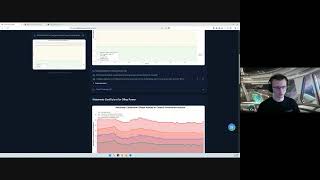
Governance Metrics Analysis
Key insight: DRep delegation is structurally sticky (~0.14% change per epoch) and Cardano's Gini coefficient (~0.93) sits between large DeFi DAOs (~0.99) and nation-states (~0.63), with the trend pointing upward. Cross-role concentration (DReps who are also SPOs / CC members) is undercounted by current charts, and rationale quality lags the meritocratic selection criteria available for stake pools (Civotas mentioned as a comparable tool for DReps). Bigger lever may be voter-side tooling and education rather than reactivating inactive DReps.

Governance Experience Insights
Key insight: only ~5% of the ~38B circulating ADA actually votes, and the barriers are structural -- weak calendar / committee communication, ~11 wallets with no governance UX standard (Lace still missing it), and very little material on how to become a DRep. DReps publishing rationales face conflict-of-interest pressure (treasury applicants), fear of losing delegation, and hostile social reactions (e.g. the SNEK vote). Smaller SPOs are also priced out of Discord tooling like Clarity at ~$75/mo.

Governance Experience Insights
Key insight: DRep voting power keeps concentrating because governance complexity drives ADA holders to shortcut-delegate to large DReps, retired DReps still hold significant power (Cardano Whale ~50M ADA), and there is no incentive mechanism that would let a K-parameter equivalent cap it. SPOs cited cold-key friction and silent treatment when publishing rationales; the CC lacks tooling to capture its debate. Funding DRep rewards from the governance-action deposit was strongly contested as 'taxing ideas'.